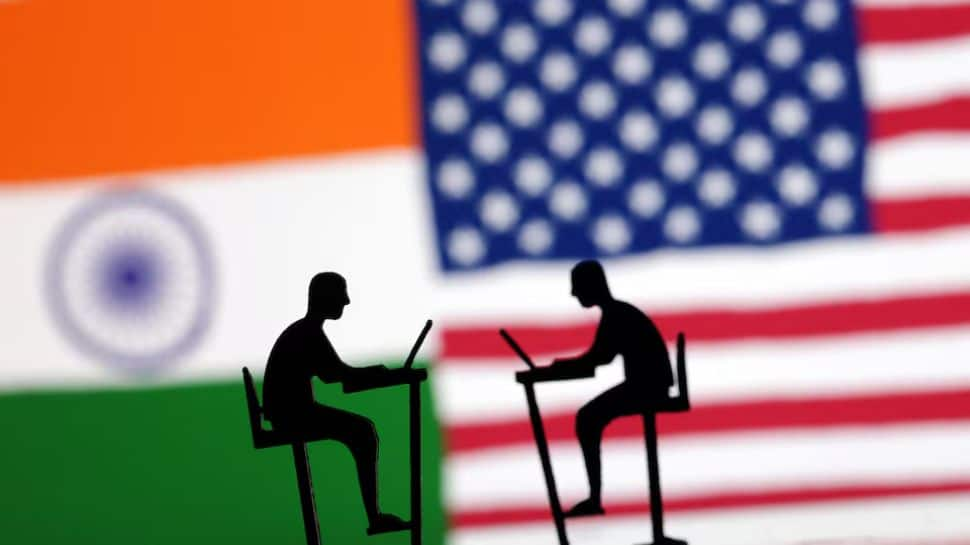
New Delhi: Talks on the India-US trade agreement have once again hit a snag. Just as negotiators were nearing a breakthrough, two influential Republican senators urged US President Donald Trump to pressure India to remove tariffs on pulses.
While the demand may seem small, it directly affects New Delhi’s agricultural policies and its strategic push for self-reliance in pulses. Negotiators now face the risk that prior progress on the deal could be slowed or complicated.
US Pulse Producers Raise Alam
Add Zee News as a Preferred Source
Senators Steve Daines of Montana and Kevin Cramer of North Dakota, representing America’s largest pulse-producing states, called India’s tariffs “unfair” and harmful to US farmers. They said that India is the world’s largest consumer of pulses, accounting for roughly 27% of global demand.
They argued that high tariffs prevent American producers from accessing this key market.
Their main concern is India’s 30% tax on yellow peas announced last October, which took effect on November 1, 2025. The senators said such measures place US exporters at a disadvantage, even when their products are high-quality. They urged Trump to make pulses a priority in any future trade deal with India.
The senators also recalled raising this issue during Trump’s first term in 2020, when the letter they sent was directly delivered to Prime Minister Narendra Modi, helping US producers gain a seat at the negotiating table.
They wrote, “As America works to correct trade imbalances, US farmers are ready to help. They have the capacity to feed and fuel the world if trade opportunities are opened.”
Equal Tariffs For All Nations
While the senators called the tariffs discriminatory against the United States, India’s pulse policy is broader. The government initially exempted yellow peas from tariffs until March 31, 2026.
The later decision to impose tariffs was driven by domestic economic and political considerations, not bilateral tensions. Falling prices from cheap imports had put pressure on Indian farmers, prompting government action.
The tariffs apply equally to all exporting countries, including Canada, one of India’s largest pulse suppliers. From India’s perspective, the move protects domestic farmers and stabilises prices rather than targeting Washington.
A New Challenge For Trade Talks
Statements from both sides suggest that the broader India-US trade negotiations were nearing completion. US Ambassador to India Sergio Gor acknowledged the complexity of the talks while expressing commitment to finalising the deal.
Commerce Secretary Rajesh Agrawal also indicated that most issues had been resolved, with only a few remaining. The senators’ intervention, however, raises the stakes. Introducing a contentious agricultural issue at this stage risks reopening debates that negotiators may have deliberately left aside to maintain momentum.
Pulses, like dairy, fall under areas where India has drawn “red lines”, given their central role in millions of households’ diets and the livelihoods of domestic farmers. Any move that undermines domestic production carries political risk for the government.
India’s Push For Pulse Self-Reliance
India’s resistance to removing tariffs is tied to a long-term strategy to achieve self-reliance in pulses. As the world’s largest producer, consumer and importer, India prioritises domestic capacity building. In October last year, the government approved the six-year “Mission for Self-Reliance in Pulses” from 2025-26 to 2030-31, with a budget of Rs 11,440 crore.
The mission aims to increase production from roughly 24.2 million tons to 35 million tons, improve productivity from 880 kg per hectare to 1,130 kg per hectare and develop high-yield, pest-resistant and climate-resilient varieties.
With domestic production already rising, the country aims to gradually reduce import dependence.
Despite these efforts, India is a pulse importer. In 2024-25, imports reached a record 7.34 million tons, meeting about 15-18% of domestic demand. Most imports came from Africa, Myanmar, Canada, Russia and Australia.
Balancing imports is necessary to manage shortages and price fluctuations, but over-dependence risks undermining domestic incentives and farmer confidence.
Tariffs As A Policy Tool
Tariff flexibility allows India to manage production cycles and domestic pressures. Locking in duty-free access for US pulses under a trade deal could limit this flexibility. Indian policymakers are unlikely to accept such constraints.
While the senators’ demand may not outright delay the trade agreement, it certainly complicates the process. For the United States, domestic agricultural politics cannot be ignored. For India, giving concessions on pulses would challenge its negotiating position and strategic investment in pulse self-reliance. Pulses may continue to be a sticking point, just as dairy and other agricultural sectors have been, depending on how aggressively the Trump administration pushes the issue.