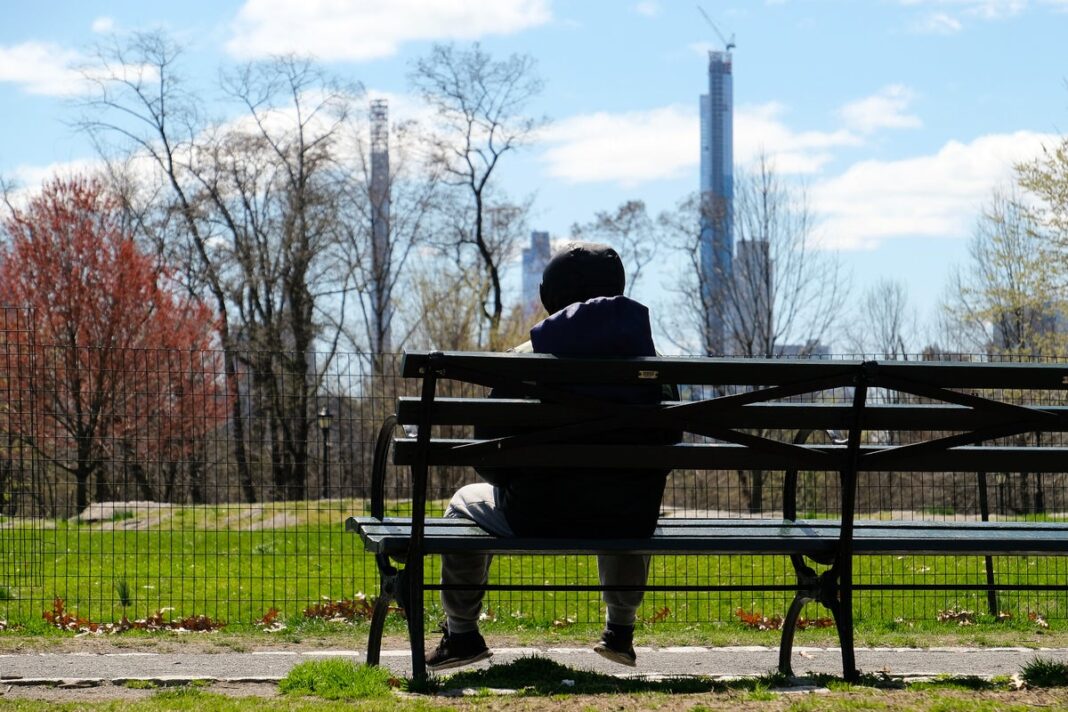
Feeling lonely? You’re not the only one.
American adults are becoming even lonelier, according to a new 3,276-person survey from the American Association of Retired Persons — and people in their forties and fifties are disproportionately impacted.
Some 40 percent of Americans aged 45 and older now report being lonely, up from 35 percent of that group reported in the two last surveys conducted in 2010 and 2018. Nearly 58 million in that age group are projected to be lonely this year, over 47.8 million in 2018.
Although anyone can feel lonely at any age, people in these age groups face unique challenges, the non-profit said, such as caregiving responsibilities, changing family dynamics and work stress.
“While progress is being made, the uptick in loneliness observed in 2025 signals an urgent need to accelerate our efforts,” the report said. “The consequences for inaction can be dire – increased risk of heart disease, anxiety and depression, and dementia, to name a few.”
Decades of research have found that loneliness and social isolation are tied to worse heart and brain health, including a 29 percent increased risk for life-threatening heart attacks and a 32 percent increased risk for stroke.
“Social isolation and loneliness are also associated with worse prognosis in individuals who already have coronary heart disease or stroke,” Dr. Crystal Wiley Cené, a professor of clinical medicine at the University of California San Diego Health, told the American Heart Association.
Male loneliness epidemic
The report also found striking differences in gender and age within those at the younger end of the 45-plus cohort, experiencing the highest rates of loneliness and men are now five percent more likely to be lonely than women.
In 2018, there was only a two percent separation between men and women, with women leading by two percent.
But some trends have continued.
Loneliness has continued to tend to decrease with age, a higher level of education and a greater household income.
Households that make $100,000 or more a year and people with at least a college degree or more have a larger number of close friends, as well.
The power of friendship
Whereas lonely adults have a smaller social circle, with more than two close family members and more than one close friend, on average. Men are more likely than women to report having no close friends.

“The share of U.S. adults age 45 and older who say they have fewer friends today than they did five years ago is on the rise,” the report noted. “In 2025, three in 10 say they have fewer friends compared to five years ago, up from 25 percent in 2018 and 23 percent in 2010.”
And one in three adults aged 45 and older said they feel lonely “always” or sometimes,” with four in 10 saying those feelings had persisted for six years or more.
More than a quarter said those feelings had lasted more than a decade.
A double-edged sword
Technology and social media can both help people feel more connected and make them feel lonelier — so what’s the fix?
To cope, the majority of people aged 45 and older watch TV – around 78 percent – use the internet, email and text. Fewer people talk to a friend or relative in person.
Just talking about it helps, said senior research adviser Lona Choi-Allum.
“We need people to talk about it so there’s not this stigma associated with it,” she said. “We need to find ways to encourage people to connect or reach out to others who might be alone, and to recognize there are barriers that are not visible.”
The report calls for legislative reform, such as the bipartisan Improving Measurements for Loneliness and Isolation Act. The act would help “bring uniformity to reporting measurements for loneliness and isolation,” according to members of Congress.
It strongly encourages American adults to reach out to friends and engage in group activities in their community, saying everyone should feel empowered to reach out to friends they’ve lost touch with or start a conversation with a neighbor or stranger at the grocery store.
“A more engaged society not only reduces loneliness but strengthens connections in our communities during a time when it is more important than ever,” it said.